Limited-time offer expires Tomorrow
Women Over 35, Did You Know…
Your 6-Part Hormone System Decides How Much Fat Your Body Burns
Meaning, No Amount Of Diet and Exercise Will Allow You To Lose Weight If A Part Of Your Hormone System Is Telling Your Body To Hold On To The Fat
You Must Unblock Your Hormone System First
(Click Play To Find Out How)
30-Day Money-Back Guarantee • Instant Access • Secure Checkout
Introducing…
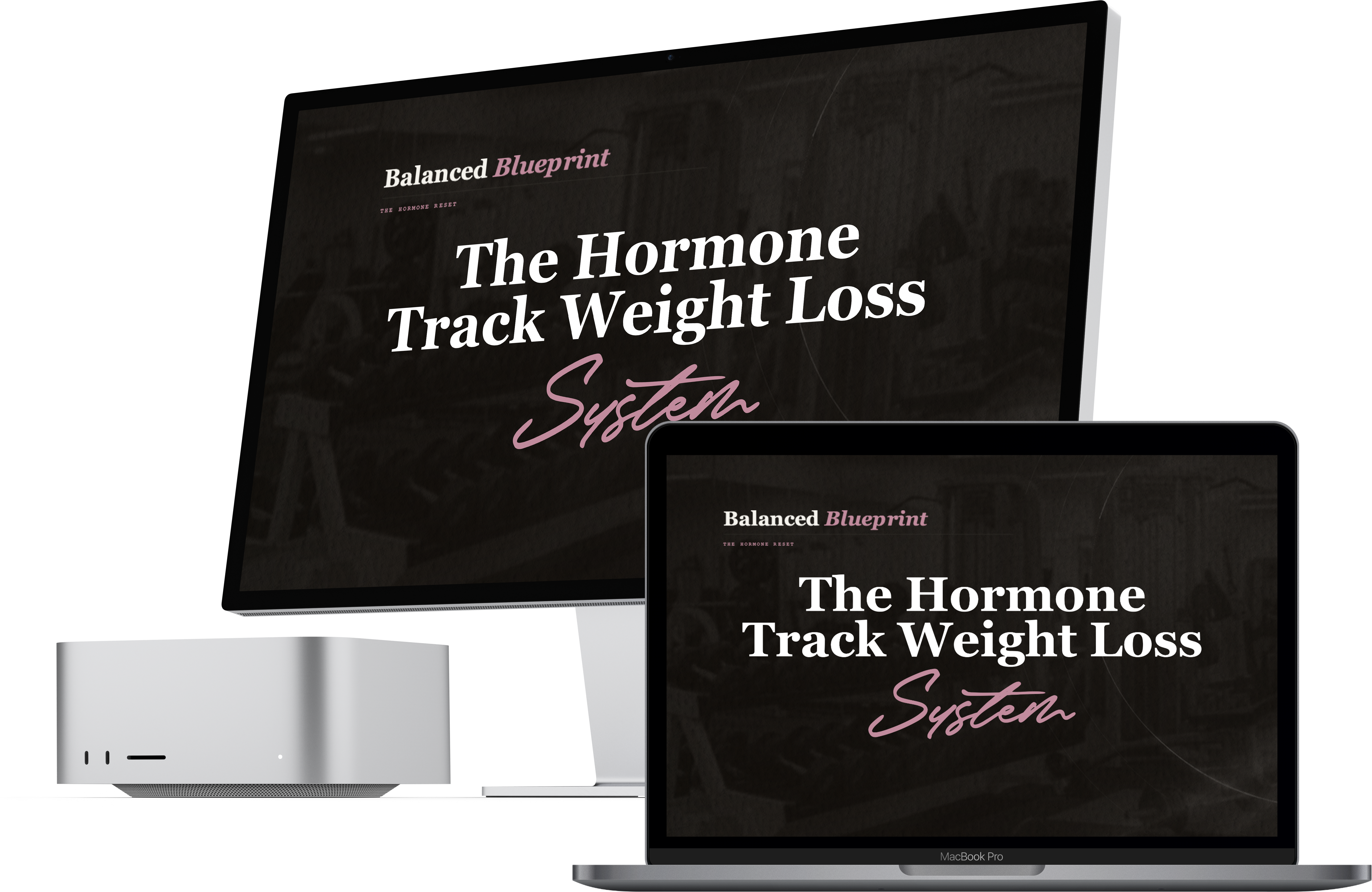
The Hormone Track Weight Loss System
I've built a 5-minute quiz that finds which part of your hormone system is blocking weight loss, and then gives you a diet and exercise plan to release the block, so you can sit back and watch the fat melt away.
Thousands of women over 35 have used my system to drop 3+ dress sizes in as little as 90 days.
30-Day Money-Back Guarantee • Instant Access • Secure Checkout

Created by Zach Faerber
Pre-med, oncology, and trauma medicine before moving into health and wellness coaching for women in menopause
If You're A Woman Over 35 And Tired Of Asking Yourself...
"I'm at the gym five, six days a week. I work out hard. And I eat fine. So why isn’t the weight coming off?”
"The doctor did my blood work, and everything shows up normal. But clearly there's something going on, I feel exhausted most days."
"This is the heaviest I've ever been in my entire life."
"Why am I tired all day but then wide awake at 10pm?"
"Why did the belly fat show up out of nowhere?"
"Why does every plan make the weight fall of for other women, but not me?"
"Is this just my body now?"
If any of that sounds like you, you've probably told yourself that you need more willpower, or that you're just not trying hard enough.
It's not that.
You've been doing your part, and your body isn't responding. That isn't a willpower problem, it's a missing-information problem. Something about your body was never checked before you were handed the plan.
Every Diet Plan You Have Ever Bought Was Written For Everyone. Which Means It Was Really Written For No One.

The same plan went to you, to a 28-year-old, and to a woman whose hormones are nothing like yours. Nobody looked at your body first.
So you "ate healthy." Maybe you cut out bread and sugar, and even turned down social events with your friends to try and be good.
But really, you were still eating randomly.
Healthy food isn't the same thing as the right food for what's going on inside you. Your body was still confused, still inflamed, and still pissed off. It just had better ingredients to be confused with.
That's problem number one, the plan was a guess.
Problem number two is that some of those guesses were making fat loss even harder.
Let me give you an example. Cortisol is your stress hormone, and when it stays high for too long, your body decides it's in danger. A body that thinks it's in danger holds onto fat, especially around your belly.
Now think about what every diet tells you to do. Cut calories, work out harder, do HIIT, do bootcamps, etc. Every single one of those pushes cortisol even higher. So the harder you work, the tighter your body holds on to the fat.
You're making losing weight harder and harder, but nobody ever told you.
But cortisol is just one of six parts of your hormone system that can block weight loss after 35. Each one needs a different way of eating and a different way of exercising, and the wrong one makes the problem worse.
And Releasing The Hormone Block That's Stopping Your Weight Loss, Works Even If...
You're on hormone replacement therapy, or your doctor manages your prescriptions.
You've got IBS, a gluten intolerance, or a food allergy.
You were on Ozempic, got cut off, and the weight came back.
You've hardly got any time to work out or meal prep.
Your doctor told you everything looks normal.
And you'll see the weight come off, without...
Another 1,200-calorie diet.
Punishing cardio.
Cutting out every food you love.
A blood test.
A new doctor.
The Critical Step Every Diet Skips That Forces The Body to Hold Onto Fat.
They all tell you to just "eat less and move more" and never look at the ONE thing that always mattered…your hormone system.
You already saw how much harder weight loss can be with high levels of cortisol. Then when you push harder and eat less, your body spikes cortisol even higher, and holds on tighter to the fat.
Well, there's another part of your hormone systems that get overlooked. Your thyroid, which burns fat by raising your metabolism.
But if you eat too little, your thyroid slows down, which makes your metabolism even slower, so the harder you diet, the less fat you burn.
And it's the same with estrogen. If your hormones are running your PMS for ten days a month and putting weight on your hips, then spin class five days a week does nothing for that.
So the reason the weight isn't coming off was never that you didn't try hard enough. It's that nobody checked which part of your hormone system was in the way before they told you what to eat or what exercises to do.

Certified In Bloodwork Interpretation · 10+ Years In Health And Fitness · 5+ Years Coaching Women Through Hormone Dysfunction · Hundreds Of Women Coached
MEET ZACH
I'm Zach Faerber. And I Built This Because I Watched It Happen From The Inside.
I lost my dad to cancer when I was a teenager, and I lost my mom to the same disease a few years later. I helped raise my younger siblings through all of it.
That's why I went into medicine. I finished pre-med, I worked in oncology, which is cancer care, and then I worked in trauma medicine.
And working on the inside, I saw the thing I want you to understand.
A woman comes in exhausted, gaining weight, and sleeping four hours a night. Her doctor runs the standard blood work. Every number comes back inside the normal range. And she's sent home.
Here's what "normal range" actually means. It's the range where you're not sick enough to treat. It doesn't mean you're well.
Your doctor checks whether you're sick and your trainer checks your workouts, but nobody is checking the thing that decides whether any of it works.
So when I left medicine and started coaching women through weight loss full time, I did the thing the system doesn't have time to do. I looked at what each woman's body was doing before I gave her a plan.
And here's what I saw, over and over again.
Two women would come to me with the same 30 pounds to lose. Both eating well. Both in the gym four or five days a week. Both had tried the same diets everyone tries. Neither one could get the weight to move.
Before I gave either of them a plan, I asked a few simple questions. How do you sleep? When does your energy drop? What do you crave? What happens after you eat?
The answers pointed at two completely different hormones.
One woman was wired at night and waking at 3am. That's cortisol, her stress hormone.
The other was crashing after lunch and hungry two hours later. That's insulin (her blood sugar), another part of the hormone system everyone overlooks.
So they got two different plans. One ate and trained to bring her stress hormone down. The other ate and trained to fix her blood sugar.
Once each of them was working on the right hormone, the weight came off for both of them.
That was the whole thing. It was never about effort. It was about which part of her hormone system was in the way. And a few simple questions found it, all of which are now in the quiz inside my Hormone Track Weight Loss System.
So Here's What I Now Do With Every Woman Before I Write A Single Meal Plan (And It's What I've Built This Quiz To Do For You), I Find The Hormone First.
There are six parts of your hormone system that block weight loss after 35, and I want to walk you through all six, because one of them is going to sound like you.
1
Cortisol, Your Stress Hormone.
You've already met her. She wakes you up at 3am. You're wired at night but dead all day. Belly fat shows up out of nowhere, you cry or snap over small things, and you get a sugar or salt crash around 3pm.
2
Thyroid, Which Sets How Fast Your Body Burns Calories.
When it's slow, you're always cold, your hair is thinning, you've got brain fog, and the weight won't move even when you're eating almost nothing.
3
Estrogen And Progesterone, The Two Hormones That Run Your Cycle.
Heavy periods. PMS that lasts a week and a half. Water retention, weight in the hips and the middle, and rage. And if you're in perimenopause, it's the hot flashes and the sleep that fell apart with no warning.
4
Testosterone. Yes, Women Have It, And It Matters.
Too much looks like chin hairs, jaw acne, belly weight, and irregular periods. Too little, which is common after menopause, looks like losing muscle no matter how much you train, and feeling like your drive is just gone.
5
Insulin, The Hormone That Handles Your Blood Sugar.
You crash after lunch and you're hungry two hours after every meal. You might have skin tags, dark patches on your neck, or diabetes in the family. Or you were on something like Ozempic, came off it, and every pound came back.
6
Your Gut. It's Part Of Your Hormone System Too.
When it's inflamed, it throws the other five hormones off. That's the painful bloating half an hour after eating, the constipation or the diarrhea or both, the food sensitivities that keep growing, and the years on an acid reflux medication like Prilosec.
Here's a number worth knowing…
80%
Of Women Over 35 Have A Hormone Imbalance That Never Gets Diagnosed.
And most women have two of these six going on at once.
Perimenopause usually pulls the thyroid down with it. PCOS usually comes with an insulin problem. That's fine.
There's always one doing most of the damage and a second one riding along. We find the main one and start there.
So Here's The Point Of What We've Been Talking About.
Every diet plan is a guess until you know which part of your hormone system is blocking it.
You find that first. Then, and only then, you pick the eating plan and the workout plan that were built to get your hormone system working again, then you can almost effortlessly lose all the weight you want.
That plan is what I call your Hormone Track, and there's one track for each of the six.
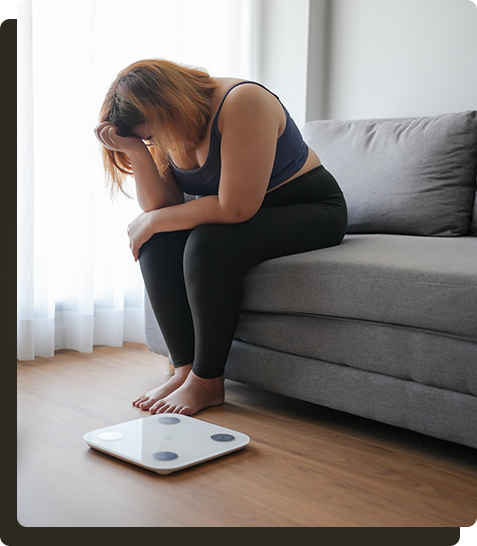
And Here's Why The Quiz Can Do This For You Without You Having To Learn Any of It.
Think about an eye test. You don't need to know how the eye works. You look at a chart of letters, you say which line is blurry, and the eye doctor tells you what glasses you need. The chart does the work.
This quiz is that chart, and your symptoms are the letters. You say what's happening in your body, and the quiz works out which part of your hormone system is most likely behind it. The figuring-out part is already built in. Then you simply follow the plan that fixes your hormone system, and the weight will drop off.
But This System IS NOT For Every Woman.
This is for the woman who knows something is off. She's been to her doctor, they ran the standard tests, and she was told everything looks normal. If that's you, this was built for you.
It's not for you if you're being treated for a serious illness right now and you're on prescription medication for it, like cancer or kidney disease. The medication changes what your body is doing, so the quiz can't read you properly, and I'd rather you stayed close to your doctor.
And you don't need blood work for this. I run labs with a lot of the women I coach one-on-one, and I think it's valuable. But most women can find their answer from their symptoms alone, because the symptoms for each part of the hormone system are so recognizable. If you want a full panel later, to be certain, that exists. You don't need it to get this working.
Here's Exactly What Happens When You Join Today.
STEP ONE
The Quiz
It takes five to ten minutes, and it asks about your sleep, your energy through the day, your cycle, your cravings, where the weight sits, and how you feel after you eat.
At the end, it tells you which of the six is most likely blocking your weight loss. And if two of them are showing up, it tells you which one is the main one and which one is the smaller one.
STEP TWO
Opening Your Track
At the end of the quiz it'll tell you which plan to follow, I call this your 'track'.
Every track has a plain-English explanation of what that hormone is doing, and then gives you the eating plan, and the workout plan to stop that hormone from blocking your fat loss. Doing this will allow the weight to drop off naturally.
There's six tracks in total, and each track is different. For example…
On the cortisol track, the first thing we do is stop the workouts that are pushing your stress hormone higher. Then we change the order you eat your food in during the day, so that hormone comes down in the morning instead of spiking, allowing you to sleep well and burn fat all night.
But…
On the thyroid track, it's almost the opposite. We feed you more, not less, and we train you less, not more, because a starved thyroid slows down even further to protect itself.
And so on.
You get all six tracks, because most women have a second one going on and because your body changes over time.
STEP THREE
Knowing What Changes First So You Know You're On Track To Your Target Weight.
The number on the scale is the last thing to change. Before it does, your afternoon energy comes back, your sleep gets better, the cravings quiet down, and you get stronger.
I give you a simple one-page tracker for those four things, so you can see it working before the scale catches up, and you don't quit right before it does.
Here's What Happened To Women Who Found The Part Of Their Hormone System That Was Blocking Them From Fat Loss
Take Lisa...
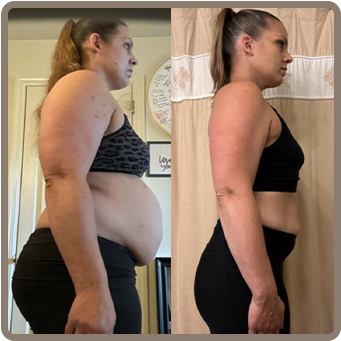
"This is the first program I can see myself sticking with long-term. If you're unsure, trust the process."
Lisa, 47 pounds, kept off for three years
She was in perimenopause. She was eating well, she was training, and she was stuck.
Every plan she'd tried had been written for someone else's body.
When we finally looked, her cortisol was high. Every hard workout she did was pushing it higher, so her body was holding onto fat no matter what she ate.
So she changed how she ate and how she trained to bring it down.
She dropped 30 pounds in her first three months. 47 pounds in total.
And three years later, it's still off.
About 30 of it in the first three months
Lisa Isn't the Only One...
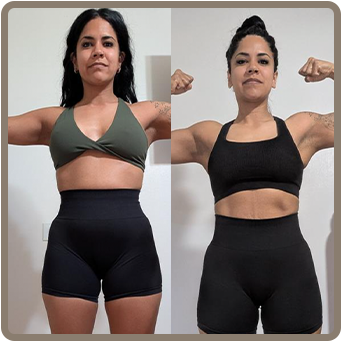
"Literally EVERYTHING changed for the better, and I can feel the difference every single day. The way my hormones were out of balance made sense as to why I felt so off. I'm so happy to finally get all the way back to myself."
Yvette, lost 22 pounds
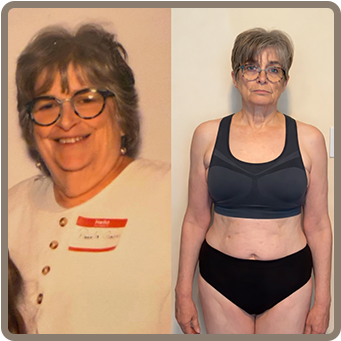
"I love the personalized attention and learning what MY body needs. It's not just a diet, it's understanding your hormones."
Pam, lost 44 pounds
About 30 of it in the first three months
"They didn't just hand me a plan and disappear. It's the first time I've felt in control of my body."
Shawn, lost 41 pounds
"I was on the fence for over a year to join. I just was thinking, oh, I'm just gonna do the Ozempic or whatever."
Kimmie sat on the fence for over a year, telling herself she'd just go and get on Ozempic instead. Then she found out what was actually going on with her body, and she chose a different way.
These are different women with different parts of the hormone system out of balance, and they all took the same first step. They found the hormone. Then they built the plan.
About 30 of it in the first three months
Right Now, Most Women Over 35 Who Can't Lose Weight Think They Have Two Choices, And Neither One Works
Choice One Is Buy Another Plan.
Another app, another coach, another meal plan that was written for everyone. You've probably spent thousands on that road already, and it always ends the same way.
Choice Two Is Go Back to the Doctor.
They run the standard tests, the numbers come back in the normal range, and you're told everything looks fine.
But There's A Third Choice…
Find out which part of your hormone system is blocking you, from your own symptoms, in five minutes. Then follow the eating plan and the workout plan built for that hormone, instead of guessing.
That third choice starts with The Hormone Track Weight Loss System.
So Here's What I Now Do With Every Woman Before I Write A Single Meal Plan (And It's What I've Built This Quiz To Do For You), I Find The Hormone First.
There are six parts of your hormone system that block weight loss after 35, and I want to walk you through all six, because one of them is going to sound like you.
The Hormone Track Quiz
It takes five minutes.
It asks about your sleep, your energy through the day, your cycle, your cravings, where the weight sits, and how you feel after you eat.
At the end it tells you which of the six is most likely blocking your weight loss, and if two are showing up, which one is the main one.
All Six Hormone Tracks
Cortisol. Thyroid. Estrogen and progesterone. Testosterone. Insulin. Gut.
This is the heart of the whole system. Every track is a complete plan for one part of your hormone system, and every track has four pieces.
1) The plain-English explanation so you can finally understand your body and know how to achieve your ideal weight.
Every track starts by telling you what that part of your hormone system is doing, why it's blocking your weight loss, and why the diets you've tried made it worse.
No lab talk, just what's happening in your body and what it means.
2) The eating plan built to unblock your hormone system.
This isn't a calorie target. It's what to eat, when to eat it, and in what order, chosen for what it does to that hormone.
On the cortisol track, we change the order you eat your food in during the day, so that hormone comes down in the morning instead of spiking.
On the thyroid track, we feed you more, not less, because a starved thyroid slows down even further to protect itself.
3) The workout plan to accelerate results.
The wrong workout pushes your hormone further out of balance, and the right one brings it back.
On the cortisol track, the first thing we do is stop the workouts that are pushing your stress hormone higher.
On the testosterone track, we add resistance exercise, because that's the track where the 1,200-calorie spin-class plan does the most damage.
4) The list of things to stop doing that slow down fat loss.
For most women, this is the piece that moves first.
A lot of what's blocking your weight loss is something a diet told you to do: the 5am cardio, the skipped meal, the workout that spikes the exact hormone you're trying to calm.
Your track tells you what to stop, and for most women, you'll stop doing things more than you'll add anything.
You get all six tracks, because most women have a second one going on and because your body changes over time. But you start with yours.
5) The One-Page Tracker.
The number on the scale is the last thing to change.
Before it does, your afternoon energy comes back, your sleep gets better, the cravings quiet down, and you get stronger.
This tracks those four things, so you can see it working weeks before the scale catches up, and you don't quit right before it does.
And Two Free Bonus Guides Worth $54, Because They Cover the Moments Where Diets Usually Fall Apart.
FREE Bonus 1: The Supplement Starter Stack (Value: $27)
The small handful of supplements that actually matter for your hormone, so you can stop buying whatever a stranger in a Facebook group told you to buy.
FREE Bonus 2: The On-the-Go Guide (Value: $27)
Hotel-room workouts, what to order at a restaurant, and what to grab when you're traveling or working a 12-hour shift. Because your track shouldn't break the first time your week does.
Let's Put This All Together.
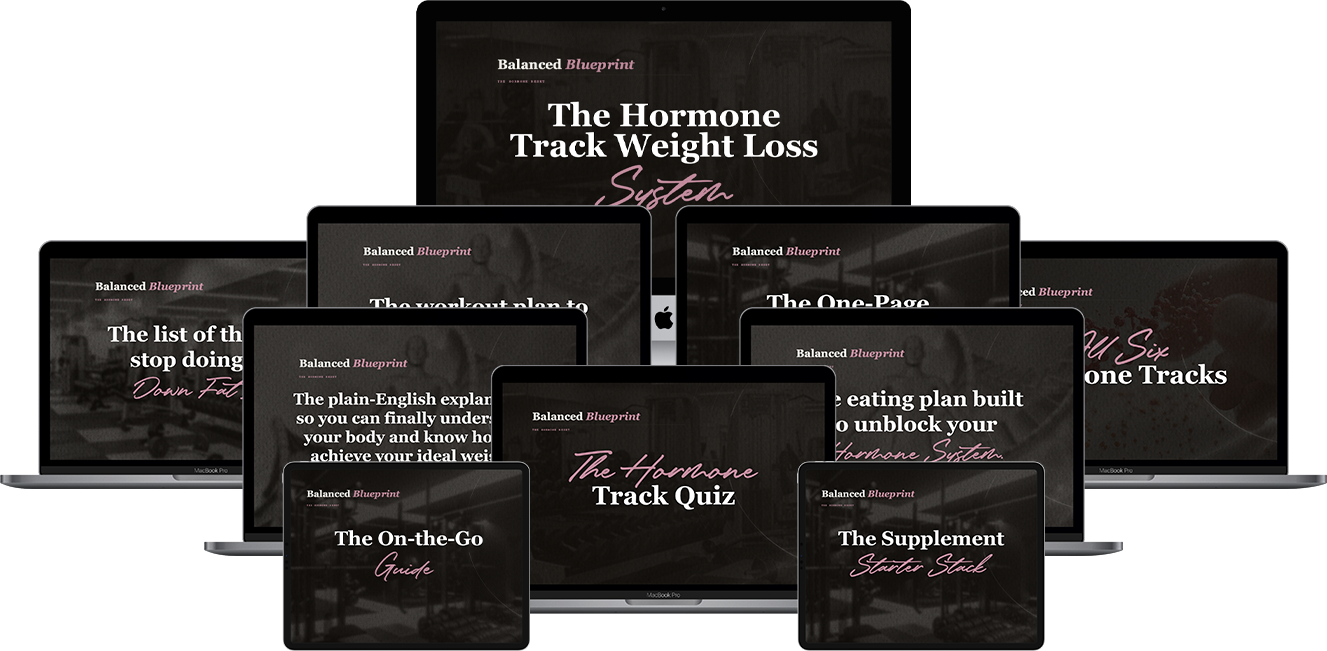
The Hormone Track Weight Loss System: the quiz, all six Hormone Tracks, and the one-page tracker (Value: $197)
FREE: The Supplement Starter Stack (Value: $27)
FREE: The On-the-Go Guider (Value: $27)
Instant digital access. Start tonight.
Total Value: $251
Today: Just $19
Now, I could charge the same for this as a blood panel costs, because at the very least it does the same job of finding what's blocking you. But I'm not going to.
I've spent years doing this one-on-one with thousands of women. I wanted to take everything I've learned from that, package it up, and make it affordable, so that every woman who needs it has access to it and can actually get this done.
Nineteen dollars is less than one tub of the protein powder somebody on Facebook told you to buy.
30-Day Money-Back Guarantee • Instant Access • Secure Checkout

And You're Protected By Our 30-Day Money-Back Guarantee
Go through the whole thing. Do the quiz, open your track, try the workouts, try the food...
If you're not sleeping better, feeling better, and seeing the weight start to come off, just email us and we'll give you all of your money back.
No questions asked.
This Price Ends Tomorrow
After that date, the $19 launch price is gone.
And remember, this isn't a theory. Pam found her hormone block and dropped 44 pounds, and thousands of women just like you are finding theirs and getting back in shape right now.
FAQ
What if two of the hormones sound like me?
That's most women. The quiz tells you which one is the main one and which is the smaller one, and you start with the main one.
Perimenopause usually pulls the thyroid down with it. PCOS usually comes with an insulin problem. You get all six tracks, so when you're ready for the second one, it's already there.
How much time does this take?
Five to ten minutes for the quiz. After that, the track is built to fit around your schedule, whatever it looks like.
A couple of quick workouts a week is enough to get things moving, and if you want to do more, the track tells you what to add and how.
It's the same with the food. There's a simple version that works when life is busy, and more detail for when you want it.
Do I need blood work for this?
No. Most women can find their answer from their symptoms alone, because the symptoms for each part of the hormone system are so recognizable.
If you want a full panel later, to be certain, that exists. You don't need it to get this working.
I'm on hormone replacement therapy, or my doctor manages my prescriptions. Does this still work?
Yes. Nothing here replaces any of that. The tracks are built to work around it, and it's just information the plan uses. Keep your doctor in the loop, as you always would.
I've got IBS, a gluten intolerance, or a food allergy.
That's fine. Nothing here replaces any of that. The tracks are built to work around it, and it's just information the plan uses.
I was on Ozempic, got cut off, and the weight came back. Is there anything here for me?
There's a track for exactly that. If you came off a GLP-1 medication like Ozempic and the weight came back, the insulin track is where you start.
I'm past menopause and I don't have a cycle anymore. Is this still for me?
Yes. If you're in perimenopause or past it, the estrogen track builds everything around keeping your muscle, because perimenopause quietly takes muscle first.
And after menopause, testosterone and thyroid are often the tracks doing the most, which is exactly what the quiz checks.
Do I need a gym?
No. The workouts are built to be done with minimal equipment, and The On-the-Go Guide covers hotel rooms and travel weeks.
Plus, on several of the tracks, the first change is doing less, not more.
How quickly do I get access?
Immediately. Your quiz and your track are waiting for you the moment you sign up. You could have your result in the next ten minutes.
How is this different from what my doctor or my trainer gives me?
Your doctor checks whether you're sick.
Your trainer checks your workouts.
Nobody is checking the thing that decides whether any of it works, and that's which part of your hormone system is in the way.
That's the step this does first. It's the step everyone else skipped.
Who created this?
Zach Faerber. He finished pre-med, worked in oncology and then in trauma medicine, and left to coach women through weight loss full time.
He has since helped thousands of women over 35 lose weight by finding the hormone that was blocking them first.
What if it doesn't work for me?
Then you pay nothing. The 30-day money-back guarantee has no conditions.
Do the quiz, open your track, try it, and if you're not sleeping better, feeling better, and seeing the weight start to come off, email us and you get every dollar back.
Here's What's Going to Happen When You Sign Up Today

You'll know which part of your hormone system has been blocking your weight loss.
You'll have an eating plan and a workout plan that were built to get it working again. Not for everyone. For you.
And for the first time, the last five diets that didn't work will make sense. Not because you failed them, but because they were guesses.
Right Now, You Have Two Paths.
Path One...
You close this page. You sign up for one more bootcamp, or one more plan written for everyone. You keep eating healthy and eating randomly.
And in six months you go back to the doctor, to hear that everything still looks normal.
Path Two...
You spend five minutes on the quiz, and by tonight you know which part of your hormone system has been blocking your weight loss.
You open your track. You stop the one thing that was making it worse. You start eating the way your body actually needs.
And thirty days from now the scale is moving, and this time you know why.
Get Instant Access to The Hormone Track Weight Loss System Today
The Hormone Track Weight Loss System: the quiz, all six Hormone Tracks, and the one-page tracker (Value: $197)
FREE Bonus 1: The Supplement Starter Stack (Value: $27)
FREE Bonus 2: The On-the-Go Guide (Value: $27)
Total Value: $251
Today: Just $19
Let's find the part of your hormone system that's been holding the weight on, get it working again, and get you back in shape, sleeping through the night, and feeling like yourself again.
© 2026 Zach Faerber / The Hormone Track Weight Loss System. All rights reserved.